
The NOVADU Method
Every child learns differently. That's why the free diagnostic session is always about getting to know the child, understanding where they are right now, and deciding together on the best path forward.
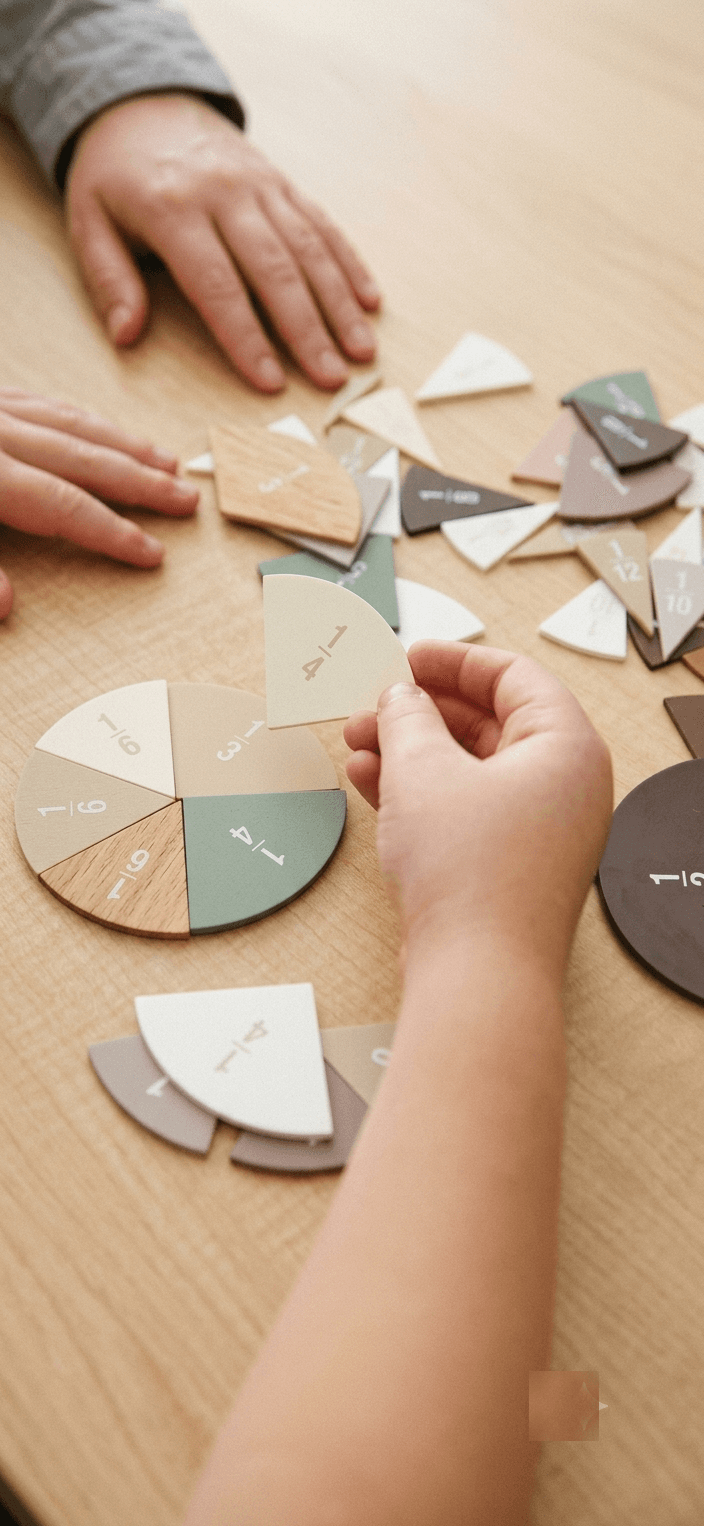
At this stage, the goal is to build solid foundations. A child learns best when they can experiment, observe and understand before memorising.
How we work
- Phonological awareness games to build reading and writing.
- Shared reading, story interpretation and vocabulary building.
- Hands-on materials to understand quantities, operations, fractions, measurement and geometry.
- Maths games that build mental calculation, logic and problem-solving.
- Observation, small experiments and hands-on activities in general studies (Estudo do Meio).
- Building autonomy: learning to organise materials, plan small tasks and review their own work.
- Sessions adapted to the child's pace, respecting the time needed to consolidate each new skill.
Examples
When fractions come up, we explore them through everyday objects, drawings or hands-on materials before applying them to textbook exercises.
In Portuguese, we often use sound games, word families, reading aloud and short writing exercises to build language before formalising grammar rules.
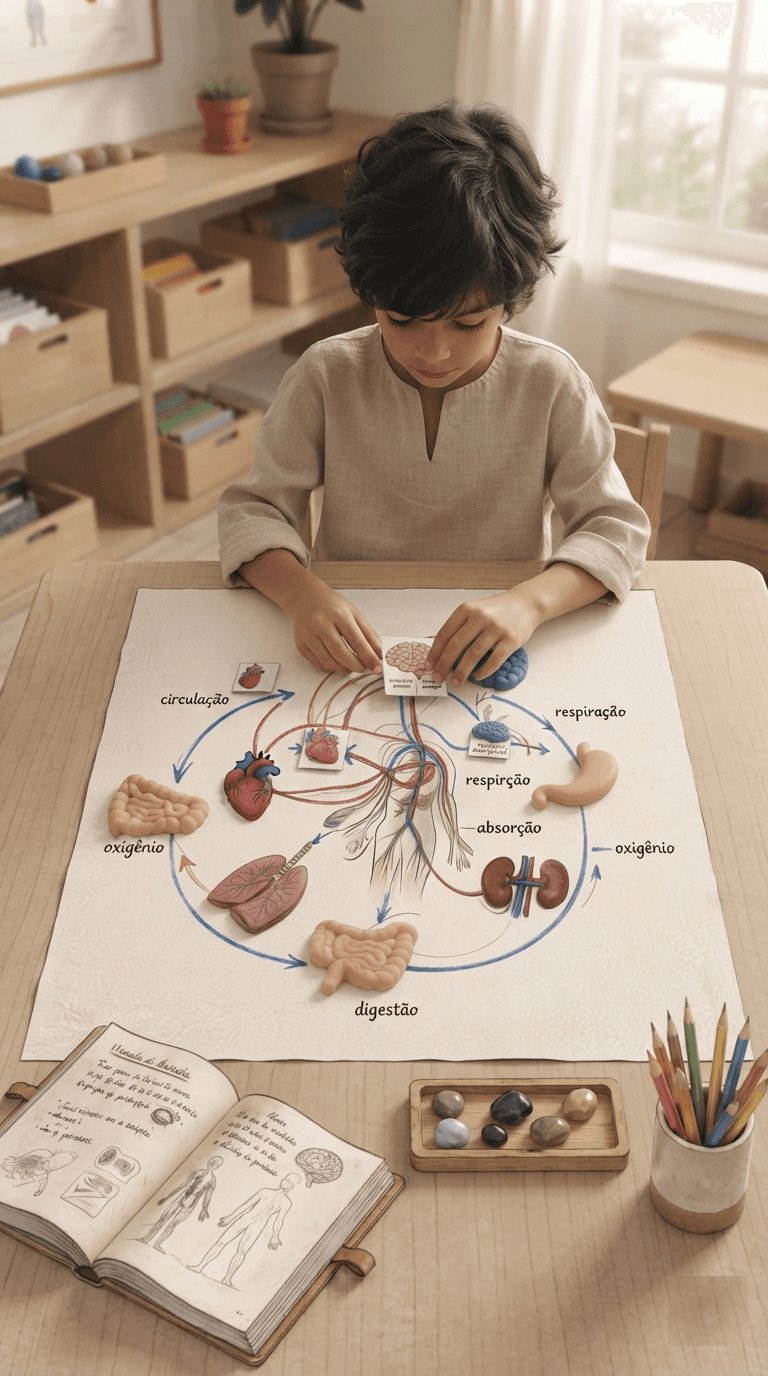
In general studies, a topic like the human body can include observation, building simple models, or experiments that help the child understand how different systems work together.
The curriculum becomes more demanding and several new subjects appear. At this stage, we help the student move from more concrete learning toward abstract thinking, without losing understanding of the concepts.
How we work
- Consolidating core Maths concepts before introducing new content.
- Building reasoning through problems that allow different solving strategies.
- Building diagrams, summaries and concept maps to organise information.
- Gradually introducing study methods adapted to the student.
- Connecting different subjects so the content makes sense together.
- Hands-on activities and small projects when they help understand more complex concepts.
Examples
When fractions become more demanding, like comparing different denominators or converting to decimals, we return to the concrete whenever a student gets stuck: strips of paper divided up, to see visually which fraction is larger, before going back to the calculation. The same happens when percentages first appear: we start from a discount on a purchase or a game score, before the abstract calculation.
In Natural Sciences, a topic like the body's systems becomes clearer when the student builds their own diagram, showing how the organs relate to each other, instead of memorising a list from the textbook.
This kind of hands-on activity doesn't happen in every session: we use it when we notice that, otherwise, the student would just be memorising without understanding.
As the content becomes more complex, the focus shifts to connecting ideas, justifying reasoning and applying knowledge to new situations.
How we work
- Guided resolution of complex problems.
- Building critical thinking and the ability to argue a point.
- Study methods adapted to each subject.
- Gradual preparation for tests and national exams.
- Individual support in managing study and workload.
Examples
In Maths, an equation starts to make sense once we show the balance of a scale, where whatever you do on one side, you have to do on the other, before formalising algebraic manipulation. With the Pythagorean theorem, we draw the squares on the sides of a triangle so the student sees the relationship before applying the formula.
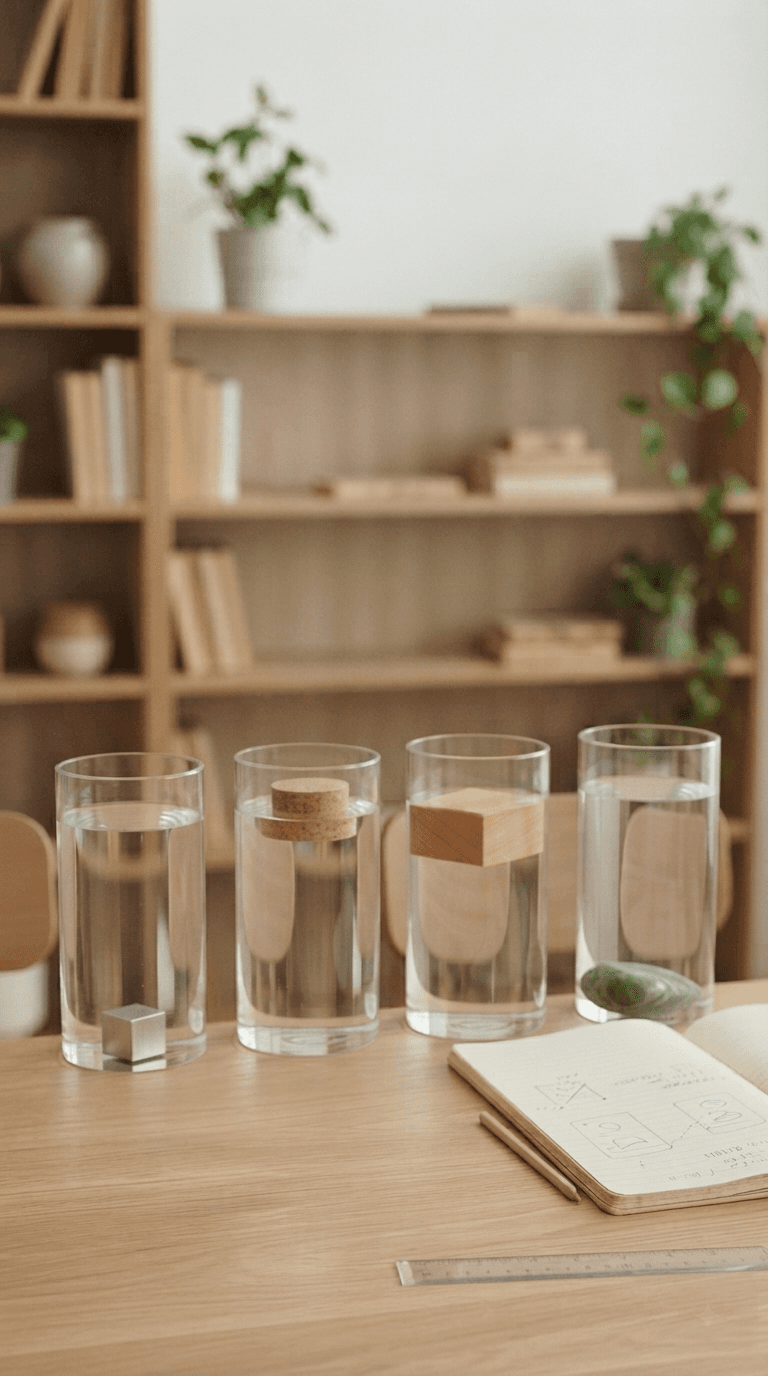
In Physics and Chemistry, a concept like density only becomes real after comparing everyday objects, understanding why something small can weigh more than something big, and only then does the formula come in. In Natural Sciences, comparing side by side, for example an animal cell and a plant cell, helps more than memorising a table of differences.
In any of these subjects, we always ask the student to justify their answer, exercising the same reasoning the 9th grade national exam will demand.
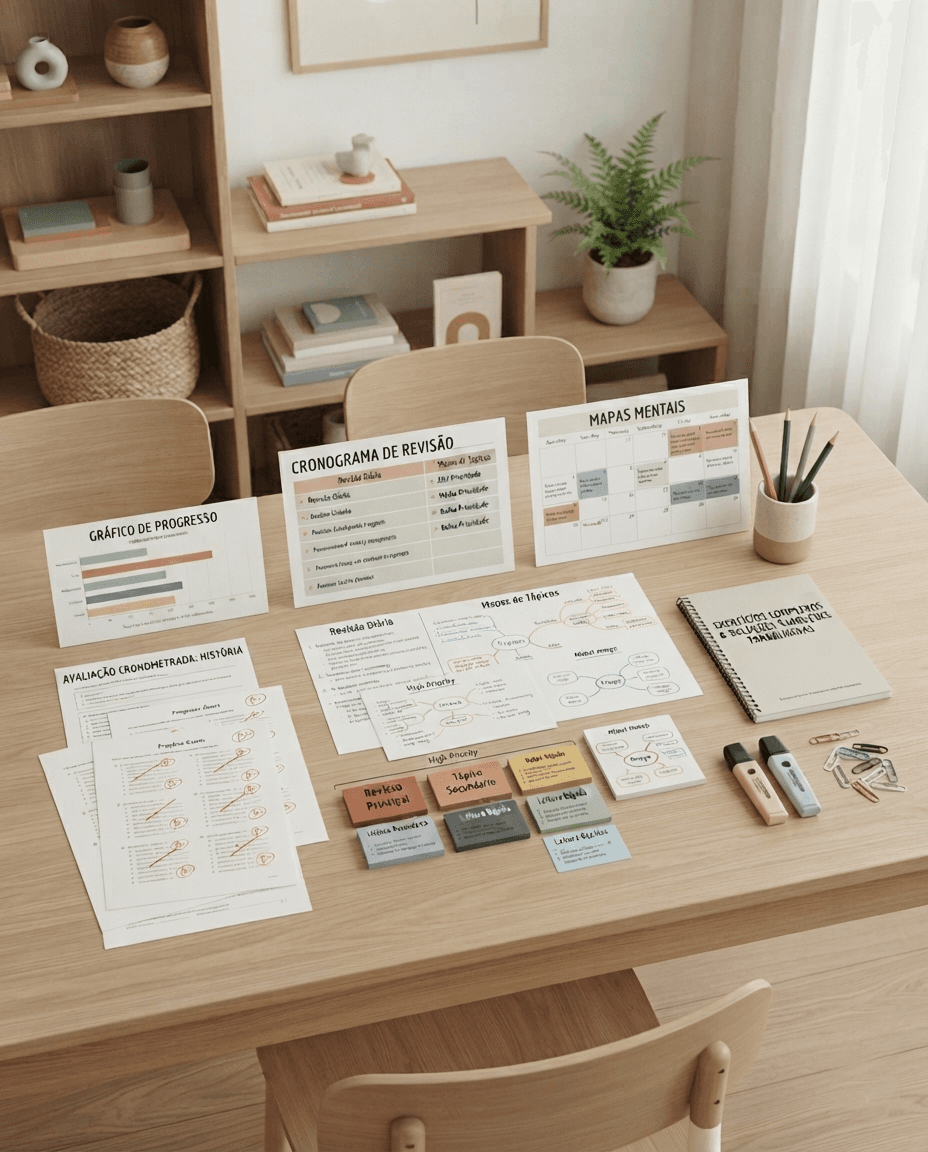
At this stage, the goal is to consolidate knowledge, prepare for national exams and build autonomy in organising study.
How we work
- Personalised study plans.
- Mock exams with detailed analysis of results.
- Time management and setting priorities.
- Summary, review and consolidation techniques.
- Building the ability to justify answers and apply knowledge to more complex exercises.
Examples
Preparing for the 12th grade national exam always starts with a timed mock exam, so the student sees with real numbers where they're losing points, before building the revision plan together with them, not for them.
In subjects with more content to review, we help build the student's own diagrams and summaries, because the act of organising the material is, in itself, a form of studying.
Throughout secondary school, the student gains more and more autonomy in managing their own study plan. We adjust our support, but the decision of what to review first is increasingly theirs.
Questions about the method
Want to see how this works in practice?
Talk to us and book a free diagnostic session.